
Thomson Twinge
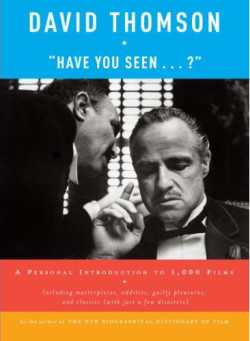 David Thomson’s “Have You Seen … ?” A Personal Introduction to 1,000 Films is the book that I’d been waiting for from the author of the Biographical Dictionary of Film. And I can’t imagine that I’m alone among his frustrated fans in being disappointed that his new tome reveals that the faults of his seminal, agitating Dictionary lie with the author and not with the constraints of that book.
Tagged: Critics, David Thomson, Have You Seen ... ?, Writers
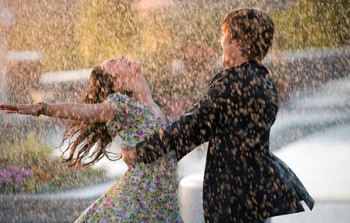 The theatrical success of High School Musical 3 begs a question: Was Disney too slow to capitalize on the success of the original, which drew an audience of nearly 14 million the first two nights it aired in January 2006? High School Musical 2, after all, got 17 million pairs of eyes with its American television premiere. Maybe it was about building the brand, but that seems like a lot of ticket cash foregone to me. With an average movie-ticket price approaching $7 (according to the National Association of Theatre Owners), the second sequel got about 6 million asses in seats in its opening weekend. Senior Year also topped this week’s Box Office Power Rankings by a wide margin, and it was the only release in the top 10 to be Rotten Tomatoes-approved “fresh.”
 In April, Rick Moody fulfilled a fantasy that many artists surely have: He delivered a pie to the face of one of his critics. Moody is probably best known as the author of the 1994 novel from which director Ang Lee’s The Ice Storm was adapted. But he’s also famous in some circles for nine words written about him: “Rick Moody is the worst writer of his generation.”
 Oliver Stone’s W. didn’t win this week’s Box Office Power Rankings, but it did better in every measure than I expected: $10.5 million in box office (fourth place), $5,175 per theater (third), 55 on Rotten Tomatoes (fourth), 56 on Metacritic (fourth). Consistency can pay off, and all that led to a second-place overall finish, behind the just-ahead-in-every-category The Secret Life of Bees (third, first, second, third). It’s curious that the critical reception to W. has been so … bland. Nobody hated it, and only Roger Ebert gave it four stars.
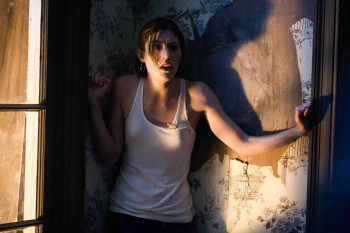 Quarantine won this week’s Box Office Power Rankings, and my first thought was that, with Rotten Tomatoes and Metacritic scores of 61 and 54, respectively, the horror flick would have done even better a few weeks ago. Sure enough, those scores would have secured an additional five points for Quarantine because of weaker competition. That got me thinking about dumping grounds – the conventional wisdom that early in the year and after the summer movie season, Hollywood drops its unwanted product on the market just to be rid of it. I decided to try to quantify the dumping ground.
 For somebody who’s been compared favorably to Bruce Springsteen and Neil Young and Nick Drake,
 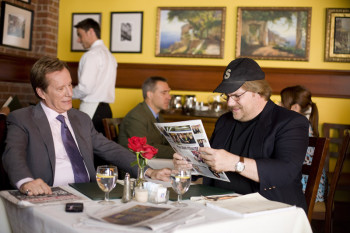 In this campaign season, what can we learn from the performances of An American Carol and Religulous? The easy conclusion is that audiences aren’t real keen on such aggressively political material, with the two movies finishing ninth and 10th, respectively, in the weekend’s overall box office. The second easy conclusion is that conservatives are slightly hungrier for entertainment than people who don’t like religion. Neither is correct.
 I find it baffling to read even
  A common regret is watching blog-a-thons come and go with nary a contribution from Culture Snob. So I was overjoyed to see the
  The Ani DiFranco appearing on stages these days might not be the same Ani DiFranco who became something of a legend over the past two decades. The old Ani averaged a record a year from 1989 through 2006, toured incessantly, and was a punkish-folk, feminist, do-it-yourself, and bisexual icon. The new Ani has a 20-month-old child and a “baby daddy” (her words, referring to producer Mike Napolitano), and in September released her first studio album in two whole years: Red Letter Year.