Illegal Alien
 I suggested it, jokingly, when I announced the Misunderstood Blog-a-thon: “Is E.T. really a sophisticated exploration of diaspora?” But the more I think of it, the more it makes sense.

 Culture Snob
 I suggested it, jokingly, when I announced the Misunderstood Blog-a-thon: “Is E.T. really a sophisticated exploration of diaspora?” But the more I think of it, the more it makes sense.
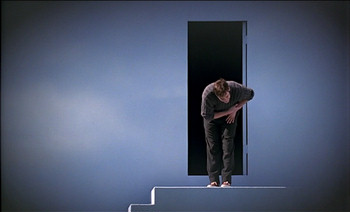 There’s a maxim that says a movie teaches you how to watch it, but Peter Weir’s The Truman Show teaches you how to watch it the wrong way. And in its brazen audience cues, it hints that you should question your reaction to the film. This is a movie that was made for misunderstanding.
 Somebody entered the following search query and eventually found Culture Snob: “talent OR skill OR intelligence ‘rupert grint'”
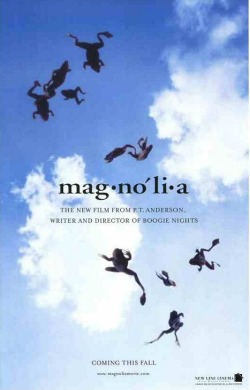 Why does nobody take the frogs seriously? Why does nobody question them? In Paul Thomas Anderson’s Magnolia, the cataclysmic, apocalyptic rain of frogs seems casually accepted. Nobody says: “That’s some fucked-up shit, those frogs.”
It’s important to misunderstand movies. Put another way: If we limit ourselves to straightforward readings of plot or themes in film, we’re denying ourselves the multifaceted nature of the medium. As the most inclusive of all the arts, cinema comprises narrative storytelling, photography, acting, sound, music, speech, movement, costume, montage, and architecture. Even the dumbest, most-crass summer blockbuster is a dense, nearly infinite trove of material to explore and analyze.
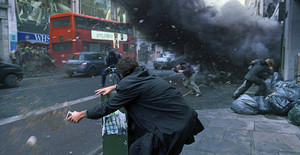 In an admiring but fundamentally dismissive review, Matt Zoller Seitz argues that Children of Men’s subject matter necessitates a treatment more rigorous and pointed. The implication is that movies that recall real-world horrors have some responsibility to them, and I don’t necessarily buy that. A film shouldn’t trivialize suffering, but serious politics (and shameful history) shouldn’t be off-limits for entertainments. Plus: Casino Royale and Borat.
This final “half-season” of The Sopranos – only five episodes remain – reminds me of the movie version of Clue, in the sense that series creator David Chase has set up any number of possible endings, none any better than another. Each week brings new foreshadowing – a new suspect if you’re inclined to think that Tony’s going to bite it – but no real sense of a final destination.
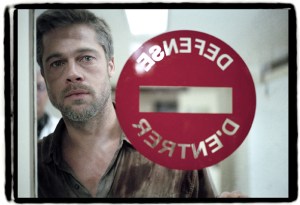 Why is it that the skillfully made and human Babel doesn’t resonate more, and feel more honest and rich?
So now we get to the inevitable hand-wringing about violence in the media, in this case trying to tie the Virginia Tech massacre to Oldboy: “The inspiration for perhaps the most inexplicable image in the set that Cho Seung-Hui mailed to NBC news on Monday may be a movie from South Korea that won the Gran [sic] Prix prize at Cannes Film Festival in 2004.” The link is tenuous, and the assertion is utterly ridiculous.
 Singer-songwriter Carrie Newcomer tells about a friend who leads a group of people who knit for the local food bank. They’ll set up somewhere and knit with a sign that reads, “Knitting for the Food Bank.” “People will come and talk to them,” Newcomer said in a phone interview last week. “Folks who might not maybe go up to someone on the corner and talk to somebody who has a sign will sit down with a group of women knitting and talk about the issue. ‘What’s happening with the food bank?'” The lesson is that directness often isn’t the best way to reach people. “Sometimes our most powerful activism, our most potent activism, comes out of what we love,” she said.