
The Clumsy Din of Chance
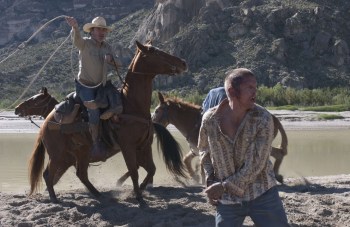 The only connection that I could quickly find between screenwriter Guillermo Arriaga and novelist Paul Auster is that they had a public “conversation” earlier this year. (The promised subjects suggest at best a superficial relationship: “the art of filmmaking, writing, and – yes – Hollywood.” How pedestrian.) This is curious to me, because Arriaga’s script for the Tommy Lee Jones-directed The Three Burials of Melquiades Estrada is classic Auster.
 When I read the initial announcement for “Short Film Day,” slated for December 4 at Ed Howard’s
  I am admittedly writing mostly from ignorance, but I can’t see any way that the
 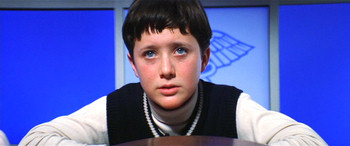 This is what customer service is all about. Seven hours after voting closed in a poll for the next installment, we’ve published the Drunken Commentary Track for Paul Thomas Anderson’s Magnolia – and the movie’s three hours long.
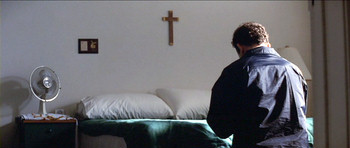 The first images of Jim Kurring involve his morning routine, and it’s nothing remarkable: He eats, he showers, he reads the paper, he exercises. But there are little hints about how we’re supposed to react to him. He laughs out loud – and not very convincingly – at something on the Today show. When he’s lifting weights, we see one of those inspirational posters encouraging “determination.” And he prays, on his knees at the foot of his bed, with a cross looking down upon him. When he finishes, he gets up and claps his hands together once, as if Team God had just broken from the huddle. We learn through voice-over that he participates in some dating service, or at the least runs a personal ad. He’s a cop, and he gives himself a pep talk in the squad car.
 At
At 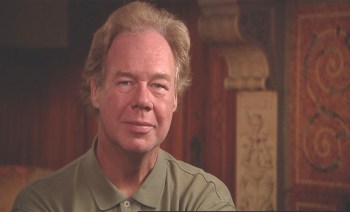 Near the anniversary of the September 11, 2001, terrorist attacks, spiritual-documentary filmmaker Martin Doblmeier conducted a survey on his
 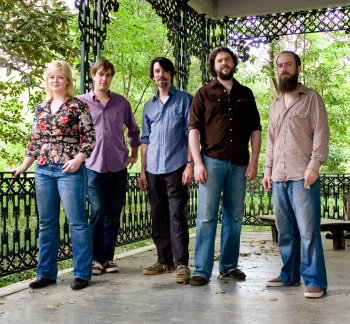 On “Puttin’ People on the Moon,” the Driver-By Truckers’ Patterson Hood sings a litany of tragedies personal and regional: “Mary Alice got cancer just like everybody here / Seems everyone I know is gettin’ cancer every year / And we can’t afford no insurance, I been 10 years unemployed / So she didn’t get no chemo so our lives was destroyed / And nothin’ ever changes, the cemetery gets more full / And now over there in Huntsville, even NASA’s shut down too.” The song is typical Drive-By Truckers: bleak, detailed, populist, Southern, and with enough twangy muscle that you can play it loud and ignore the skill of its songwriting and the loving attention it pays to the downtrodden, heard in the indignant desperation of Hood’s damaged falsetto on the chorus.